My op-ed piece is Steve Job's Sister, Mona Simpson, giving an eulogy for Steve Job. She didn't know that her long-lost brother was Steve Jobs--she met up with him when she was 25, and they became close friends since. She wrote about how he lived virtuously, humbly, and determinedly, and explained how these traits never disappeared even through his sickness. The article transitions to how his death was like, ending with his own last words: "OH WOW! OH WOW! OH WOW!"
The article was very effective. It convinced the readers how Steve Jobs was not a self-centered CEO stereotype. Using touching stories, Simpson strengthened her argument with pathos. It gave a feel of an insider's relation with Steve Jobs. The chronological order of events in the also allowed the article to smoothly transition to how he was when he was healthy, ill, and eventually dead. This piece of writing was clearly effective in showing how great Steve Jobs was beyond the Apple Company.
Tuesday, November 1, 2011

haphephobia
It's the fear of touching or being touched by people. It feels like my life depends on my personal bubble not rupturing. Handshakes are absolutely dreadful. The "brief" moment where my palm touches another man's palm burns in agony. Any mind reader would recoil from the deafening scream inside my head from the irrational panic that overtakes me. A pat on the back becomes a baseball bat blow, causing cold sweats and convulsions that linger after the incident.
It feels pathetic. Why should such an insignificant touch affect me so? It takes such effort to suppress the noticeable results when someone happens to touch me. I've been able to control compulsive shouts of, "Don't touch me!" whenever someone oblivious to this fear steps over the line. Progress has been made: I sometimes accept hugs or hand them out to friends who truly need it (although I never touch them with my hands, just forearms). But anything unexpected can cause pure dread: my delicate personal bubble does contain my life.
It feels pathetic. Why should such an insignificant touch affect me so? It takes such effort to suppress the noticeable results when someone happens to touch me. I've been able to control compulsive shouts of, "Don't touch me!" whenever someone oblivious to this fear steps over the line. Progress has been made: I sometimes accept hugs or hand them out to friends who truly need it (although I never touch them with my hands, just forearms). But anything unexpected can cause pure dread: my delicate personal bubble does contain my life.
Growing my Essays
I stumble a small idea seed, either left behind from a piece of literature, a teacher, or my curiosity. It's a small seed, but I reach out to grasp it. It's sometimes a long distance between here and a safe location to plant the seed, and I pray I don't lose it.
At my desk, on my bed, or in front of a computer, I take that minuscule seed and nurture it to grow. Pencil or pens, paper or keyboard, all can germinate that seed. More thought, effort, and patience grow the idea into a work of writing. A little pruning or a little fertilizer strengthen the paragraphs and sentences that branch from the main body until it sprouts a fruiting body. I take the fruit of my work to the kitchen for final preparations. A little spice and a low simmer later, others are ready to indulge on my idea.
At my desk, on my bed, or in front of a computer, I take that minuscule seed and nurture it to grow. Pencil or pens, paper or keyboard, all can germinate that seed. More thought, effort, and patience grow the idea into a work of writing. A little pruning or a little fertilizer strengthen the paragraphs and sentences that branch from the main body until it sprouts a fruiting body. I take the fruit of my work to the kitchen for final preparations. A little spice and a low simmer later, others are ready to indulge on my idea.
Tuesday, September 6, 2011
Presidential Inauguration Word Cloud: "Peace" and "War"
New York Times compiled here a word cloud for the presidential inauguration speeches where the size of the word correlates to it's frequency in the speech. One thing that jumped out on me was the use of the words "peace" and "war" during major war times.
In America's early years, the word "war" was used significantly more than "peace." For example: preceding the war of 1812, James Madison said "war" over twice as much as any other word during his second term's inauguration speech. The same thing happened during Abraham Lincoln's speech in 1865 after the American Civil War.
It wasn't until 1901, after the Spanish-American War, that the words "peace" began showing up more during the president's speeches. In William McKinley's speech, "peace" and "war" appeared seven times each. The last time "war" was spoken excessively was in Warren Harding's speech in 1921, two years after World War I ended.
The first time the word "peace" began appearing more in presidential inaugurations was Woodrow Wilson's 1917 speech. It makes sense, especially since he didn't want America to get involved in the war. Franklin Roosevelt's 1945 speech was similar, where "peace" became his most used word.
After World War II ended "peace" became commonplace in the president's speeches. It makes sense, especially since that period was the Cold War. Interestingly, "peace" was used excessively during Dwight Eisenhower's and Richard Nixon's speeches, which took place during the Korean and Vietnam wars. The use of the word "war" was a combined 13 times versus 53 times for peace. During the climatic part of the Cold war, Ronald Reagan's ratio came to a whopping 2 for "war," 21 for "peace."
Since the War on Terror, the frequency of both words declined. The presidents spoke "war" about twice per speech. Although the word "peace" frequency dropped tremendously, it went under the cloak of "freedom" and "liberty" during George W. Bush's inauguration in 2005. Unlike most war-time speeches, Barack Obama's 2009 speech didn't hover around war/peace-related words.
In America's early years, the word "war" was used significantly more than "peace." For example: preceding the war of 1812, James Madison said "war" over twice as much as any other word during his second term's inauguration speech. The same thing happened during Abraham Lincoln's speech in 1865 after the American Civil War.
It wasn't until 1901, after the Spanish-American War, that the words "peace" began showing up more during the president's speeches. In William McKinley's speech, "peace" and "war" appeared seven times each. The last time "war" was spoken excessively was in Warren Harding's speech in 1921, two years after World War I ended.
The first time the word "peace" began appearing more in presidential inaugurations was Woodrow Wilson's 1917 speech. It makes sense, especially since he didn't want America to get involved in the war. Franklin Roosevelt's 1945 speech was similar, where "peace" became his most used word.
After World War II ended "peace" became commonplace in the president's speeches. It makes sense, especially since that period was the Cold War. Interestingly, "peace" was used excessively during Dwight Eisenhower's and Richard Nixon's speeches, which took place during the Korean and Vietnam wars. The use of the word "war" was a combined 13 times versus 53 times for peace. During the climatic part of the Cold war, Ronald Reagan's ratio came to a whopping 2 for "war," 21 for "peace."
Since the War on Terror, the frequency of both words declined. The presidents spoke "war" about twice per speech. Although the word "peace" frequency dropped tremendously, it went under the cloak of "freedom" and "liberty" during George W. Bush's inauguration in 2005. Unlike most war-time speeches, Barack Obama's 2009 speech didn't hover around war/peace-related words.
Wednesday, August 31, 2011
Animal, Vegetable, Miracle Must Read!

The book caught my interest right away since I myself am an avid gardener. Although it's difficult to grow vegetables in my yard; about 90% of it is shaded by our elderly oaks and ashes. I could easily relate to Barbara's labor of love to manually de-weed between the thorny pumpkin and cucumber leaves, plucking those nasty finger-sized hornworms off of the tomato plants, canning the 54lbs of strawberries and 86 ears of corn, saving seeds, and the pure satisfaction that the taste indeed is richer than the watered-down lumps of plant matter found in supermarkets today.
I feel like the book did it's intended purpose: get me aware about where my food comes from and what it went through to reach me. I've pondered about the ethical issues surrounding both the meat and produce industry more than usual. Right now I feel like if I was given the choice, I'd go the extra mile to get organically grown produce to help the workers, soil, and ecosystem from the damaging conventional means of farming, especially if it was local.
Overall, this book is worth reading no matter your location on the reading spectrum. Both casual readers and inspiration-seeking readers can enjoy the story.
Tuesday, August 30, 2011
How the Internet Affects Our Mind's Mechanics
Nicholas Carr points out a startling phenomenon among internet users: people are beginning to have troubles concentrating on lengthier articles. All of the instantaneous access to information is changing the way our mind functions. As Maryanne Wolf puts it, we're changing "how" we read by changing "what" we read thanks to the plasticity of our brain.
What begins to worry me is what lies in the future of mankind. Google is doing to it's users what Frederick Taylor did to his employees--"systematize everything" to the point of maximum efficiency. When the article explained Google's aspirations for artificial intelligence, I began to wonder what benefits this brings to us as a species. It's hard to explain what the purpose of our existence is, but I believe it goes along the lines of enjoying life to it's fullest potential and to apply ourselves to the better of the world, not just civilization.
Our minds are vast, complex mechanisms. We can do more than retain knowledge; we can apply different concepts in different ways to create something new and original. We can feel satisfaction after applying ourselves and uncovering a different truth to ponder. An artificial intelligence (thus far) would have difficulty doing all of that. We should put forth the extra effort to not fall into the trap of "instant gratification" easy access to knowledge provides.
I find it funny that the general internet culture has implemented the "tl;dr" (which stands for "too long; didn't read") at the end of long posts.
tl;dr: you're just another statistic if you only read this!
What begins to worry me is what lies in the future of mankind. Google is doing to it's users what Frederick Taylor did to his employees--"systematize everything" to the point of maximum efficiency. When the article explained Google's aspirations for artificial intelligence, I began to wonder what benefits this brings to us as a species. It's hard to explain what the purpose of our existence is, but I believe it goes along the lines of enjoying life to it's fullest potential and to apply ourselves to the better of the world, not just civilization.
Our minds are vast, complex mechanisms. We can do more than retain knowledge; we can apply different concepts in different ways to create something new and original. We can feel satisfaction after applying ourselves and uncovering a different truth to ponder. An artificial intelligence (thus far) would have difficulty doing all of that. We should put forth the extra effort to not fall into the trap of "instant gratification" easy access to knowledge provides.
I find it funny that the general internet culture has implemented the "tl;dr" (which stands for "too long; didn't read") at the end of long posts.
tl;dr: you're just another statistic if you only read this!
Monday, August 29, 2011
Skunk Dreams: How Obstacles and Desires Explain the Plot
I don't think the story, Skunk Dreams by Louise Erdrich, is confusing if we consider her collection of stories mimicking the major theme involving obstacles and dreams. When Erdrich was young, she had no obstacles and was able to "freely" move about, settling in the football field like how the skunk moved about. She continued that life style while teaching poetry and living in those cheap motels.
As she mentioned, "Without obstacles, the notion of development is inconceivable. There would be nothing to master." That lifestyle would nonetheless cause her to turn inward and ultimately settle in New Hampshire. The new scenery became obstacles to the vast open skies she was used to while in North Dakota. Hence, she was faced with the desire to get away and overcome the obstacles of the scenery.
Then she ultimately found peace and calm in the forest with the giant white pine. When they put up the whimsy fence, there was again a physical obstacle. This lead to the desire to overcome the fence, causing her to consider methods to overcome the fence. Eventually, she did manage enter the forest and wander the forest freely, like the skunk.
She ended the story with how she wanted to be the skunk--able to move freely without witnessing obstacles. Ultimately, it wasn't until she overcame the obstacles that she began behaving like a skunk.
As she mentioned, "Without obstacles, the notion of development is inconceivable. There would be nothing to master." That lifestyle would nonetheless cause her to turn inward and ultimately settle in New Hampshire. The new scenery became obstacles to the vast open skies she was used to while in North Dakota. Hence, she was faced with the desire to get away and overcome the obstacles of the scenery.
Then she ultimately found peace and calm in the forest with the giant white pine. When they put up the whimsy fence, there was again a physical obstacle. This lead to the desire to overcome the fence, causing her to consider methods to overcome the fence. Eventually, she did manage enter the forest and wander the forest freely, like the skunk.
She ended the story with how she wanted to be the skunk--able to move freely without witnessing obstacles. Ultimately, it wasn't until she overcame the obstacles that she began behaving like a skunk.
Updike vs. Sontag: Views of 9/11
There are obvious contrasting views between the two article written by John Updike and Susan Sontag. Updike presented a first-person recollection of seeing the towers fall from his relative's apartment whereas Sontag critiqued how America handled the situation afterward.
Updike's article raised the question of limiting our freedoms--more specifically, freedom of motion. Should we cut back on some of those freedoms to better protect ourselves from future threats? An example Updike included: should we limit the people joining flight school in case someone decides to kamikaze attack the United States? I feel that limiting our freedoms won't solve anything. If a terrorist organization truly wanted to attack us again, they would think ahead and send the martyr to a pilot school in the UK instead, where they'd be more likely to pass the screening.
Sontag main point revolved with how we blindly followed what the government and media reported. She noted how people (who opposed the president) now supported Bush and his policies. I believe there's reason to that phenomenon. A single leader can better control a group or country of people faster than one whose subjected to multiple views and counter-views. If the most or all of congress follow the president's views completely, things move rapidly through the system and can quickly act upon the threat. However, in haste, things can be overlooked. I agree with Sontag that we needed to spend more time discussing the new policies and considering different ideas to prevent a mess in the future.
Updike's article raised the question of limiting our freedoms--more specifically, freedom of motion. Should we cut back on some of those freedoms to better protect ourselves from future threats? An example Updike included: should we limit the people joining flight school in case someone decides to kamikaze attack the United States? I feel that limiting our freedoms won't solve anything. If a terrorist organization truly wanted to attack us again, they would think ahead and send the martyr to a pilot school in the UK instead, where they'd be more likely to pass the screening.
Sontag main point revolved with how we blindly followed what the government and media reported. She noted how people (who opposed the president) now supported Bush and his policies. I believe there's reason to that phenomenon. A single leader can better control a group or country of people faster than one whose subjected to multiple views and counter-views. If the most or all of congress follow the president's views completely, things move rapidly through the system and can quickly act upon the threat. However, in haste, things can be overlooked. I agree with Sontag that we needed to spend more time discussing the new policies and considering different ideas to prevent a mess in the future.
Friday, July 8, 2011
HI
Welcome to my AP Composition blog! This blog is designed for my AP Composition class at 43° 00′ 43″ N 89° 17′ 38″ W. I'm excited to take it my senior year.
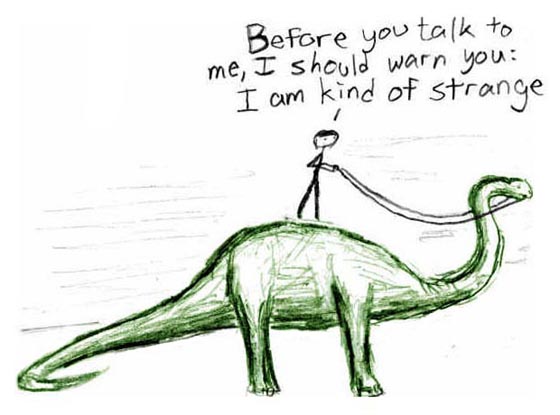
Some of you may already know this, but I am rather peculiar. I have unusual hobbies like weaving metal rings into chainmail, but I also have more common ones like gardening, piano playing, and art. Sports I enjoy include cross country running, archery, and track (pole vaulting YEAH!).
Although English isn't as preferable as math and science, I still enjoy it. I'm currently working on my goal to read most books on the western canon, or at least the list I compiled. I'll add a tab which lists the books when I have the time.
My goal is to make my last year in high school the best possible, both academically and socially. It's sad that this is the last year with friends and classmates whom I've been around with for most of my childhood, but I see the potential to make new friends further down the path of life.
Subscribe to:
Comments (Atom)